^
#
A
B
C
D
E
F
G
H
I
J
K
L
M
N
O
P
Q
R
S
T
U
V
W
X
Y
Z
::
+
"
?
Showing posts with label CUTS. Show all posts

Base-Cut

Base-Cut

v. To make a very shallow cut around three sides of a plastic-wrapped CASE containing a CARDBOARD TRAY, in order to allow the outer covering to be peeled back out of the way and eventually removed. —n. Any such cut. See also BOX CUTTER, H-CUT, LIFT-CUT, PEEK-CUT, SHARK-CUT, STACK-CUT, TAPE-CUT, TOP-CUT, TRAY-CUT, WINDOW-CUT, X-CUT.

NOTE: Candidates? Plastic-covered tray CASES containing jars of spaghetti sauce, jars of baby food, cans of cat or dog food, and so on.

Ordinarily, you first would make an H-CUT, extract a single can or jar out the top of the still-intact case, and only make a Base-Cut once you're fairly sure the entire CASE will GO.

However, when THROWING LOAD, except for SPECIALS (easily identified as multiple CASES of the same ITEM), the presumption is it will all GO, so you'd often employ the Base-Cut's many-at-once variation: a STACK-CUT.

Blade

Blade

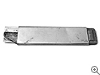
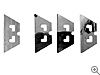
n. 1. A small replaceable, disposable sharp-edged and pointed piece of metal that goes into a BOX CUTTER for the purpose of making CUTS. Also called “utility knife blade.” Blades are trapezoidal, with the base providing two sharp points and a long cutting edge that may be reversed when one end becomes dull. 2. Square, single-edge razor Blades as are used in the push-up style BOX CUTTERS that are frowned upon because they are very unsafe and have an unfortunate tendency to create STORE DAMAGE.

NOTE: The approved, trapezoidal Blades come in two lengths. The longer style is necessary to prevent jamming caused by twisting the Blade in older, longer CUTTERS such as the classic S3. Newer CUTTERS, such as the S4 and later models suffer from no such problems, and can use the shorter (less expensive) Blades.

TIP: Blacken Blades. Before loading new Blades into the handle of your BOX CUTTER, take your MARKER and blacken one end of each Blade on both sides, and put a dot on both sides of the other, unpainted tip. Then, when you load a new Blade, use the silver end with the dot first. Later, after you've forgotten whether the other end of that Blade is sharp or not, look at its back end. Black means sharp and unused. Silver means toss out the whole Blade and get a new one from the cache in your handle. No thinking required!

Box Cutter

Box Cutter

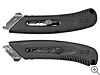
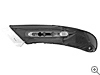
n. 1. A special utility knife for STOCK CLERKS that's a required and indispensable tool for opening BOXES or other packaging. The standard-issue version comes in both right-handed models, and has a preset stop at the appropriate depth for opening many CARDBOARD CASES without (usually—be careful!) damaging the contents. A compartment in the handle can hold extra BLADES, which are sharp, double-ended trapezoids. 2. A non-standard, all-metal “push-up” style device that uses regular, rectangular single-edge razor blades. These are against STORE policy, as they are less safe and by improper use are also far more likely to create accidental STORE DAMAGE. See also BASE-CUT, H-CUT, LIFT-CUT, PEEK-CUT, SHARK-CUT, STACK-CUT, TAPE-CUT, TOP-CUT, TRAY-CUT, WINDOW-CUT, X-CUT.